Visiting here is bringing you the knowledge of how your Association operates to support and protect your best interests and connect you to the top resources and expertise in the key areas of concern that could affect your rights and reasonable enjoyment of property. Like a family we are here to stand by you and fight adversities that will in turn make us all stronger and closer.
WE SHALL NEVER SURRENDER.
Last week the population of the planet surpassed eight billion people thereby doubling in number over the past fifty years. As a consequence we have grown the ecological, climate, resources, economic and agricultural food impacts by similar degrees. Consider for example, oil and natural gas that have expected reserves of 47 and 53 years, respectively, based on current global per capita consumption. So what happens when we double the population over the next fifty years?
Without factoring in the laws of diminishing returns these reserves may only last 25 years or less. Then what? Society will have no dependable sources of energy - as fossil fuels now provide more than 80 percent of the global energy needs and there are no practical alternatives. Renewable energy sources cannot meet the needs or replace them because they are too intermittent and have storage limitations. Moreover, they negatively affect the biosphere and will use up the precious arable land needed to feed the billions of new and hungry mouths.
In the final analysis, if there is any hope for a sustainable human society we need to stop doubling the population every 5o years, and learn how to Degrowth economic activity and contract population levels.
Otherwise, we will be joining those other species in the Sixth Extinction Hall of Shame in fairly short order.
Politicians and economists talk glowingly about growth. They want our cities and GDP to grow. Jobs, profits, companies, and industries all should grow; if they don’t, there’s something wrong, and we must identify the problem and fix it. Yet few discuss doubling time, even though it’s an essential concept for understanding growth.
Doubling time helps us grasp the physical meaning of growth—which otherwise appears as an innocuous-looking number denoting the annual rate of change. At 1 percent annual growth, any given quantity doubles in about 70 years; at 2 percent growth, in 35 years; at 7 percent, in 10 years, and so on. Just divide 70 by the annual growth rate and you’ll get a good sense of doubling time. (Why 70? It’s approximately the natural logarithm of 2. But you don’t need to know higher math to do useful doubling-time calculations.)
REAL IMPACT OF EXPONENTIALS POPULATION AND ENERGY
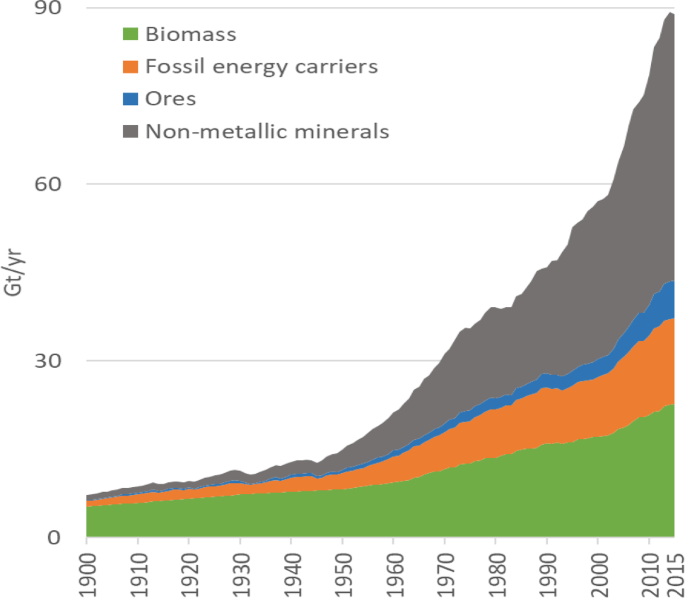
Here’s why failure to think in terms of doubling time gets us into trouble. Most economists seem to believe that a 2 to 3 percent annual rate of growth for economies is healthy and normal. But that implies a doubling time of roughly 25 years. When an economy grows, it uses more physical materials—everything from trees to titanium. Indeed, the global economy has doubled in size in the last quarter-century, and so has total worldwide extraction of materials. Since 1997 we have used over half the non-renewable resources extracted since the origin of humans.
As the economy grows, it also puts out more waste. In the last 25 years, the amount of solid waste produced globally has soared from roughly 3 million tons per day to about 6 million tons per day.
A new poll shows the majority of Ontario renters are having to choose between food and paying their rents.
When it comes to housing affordability, this province is on fire.
Advocacy Centre for Tenants Ontario
With a provincial election just days away, the housing crisis is top of mind for many. With each passing month, rental rates are soaring across the province. Compared just to this time last year, average rents for a 1-bedroom unit have increased almost 13% in Toronto, 15% in Burlington, 12% in Guelph, and almost 10% in Hamilton. Rents have risen in a province that already has some of the highest in the country.
Decades of austerity driven policy are forcing renters across Ontario to continuously try to make do with less. Wages, of course, have not kept pace with rising costs of living. A minimum wage of $15/hour still lags behind what Ontarians need to live. Experts have demonstrated a living wage should be much higher than that – in Toronto, for example, a living wage is $22.08/hr.
IS FOOD INSECURITY IN ONTARIO NOW A CRISIS?
Some may blame the dire affordability crisis in Ontario solely on the pandemic. However, rental costs had been on the rise before the pandemic, just as wages had failed to keep up. The pandemic exacerbated the crisis, but it did not create it. What’s more, the pandemic has had widely differing impacts depending on wealth. The pandemic itself has been very, very kind to the most wealthy among us. A new report from OxFam International has found that “billionaires have seen their fortunes increase as much in 24 months as they did in 23 years,” and “the combined crises of COVID-19, rising inequality, and rising food prices could push as many as 263 million people into extreme poverty in 2022, reversing decades of progress. This is the equivalent of one million people every 33 hours.”
What does this global money grab look like in the context of Ontario?
Ordinary Ontarians are the ones being sacrificed in the name of profit as the financialization of housing continues – and renters are feeling the impacts most of all.
ACTO commissioned EKOS to conduct a province-wide poll of Ontario renters this month. We now have the results of the poll, and the findings are stark. Renters are being squeezed in an extreme affordability crisis that affects them in every single part of their lives, and very little is being done to help them.
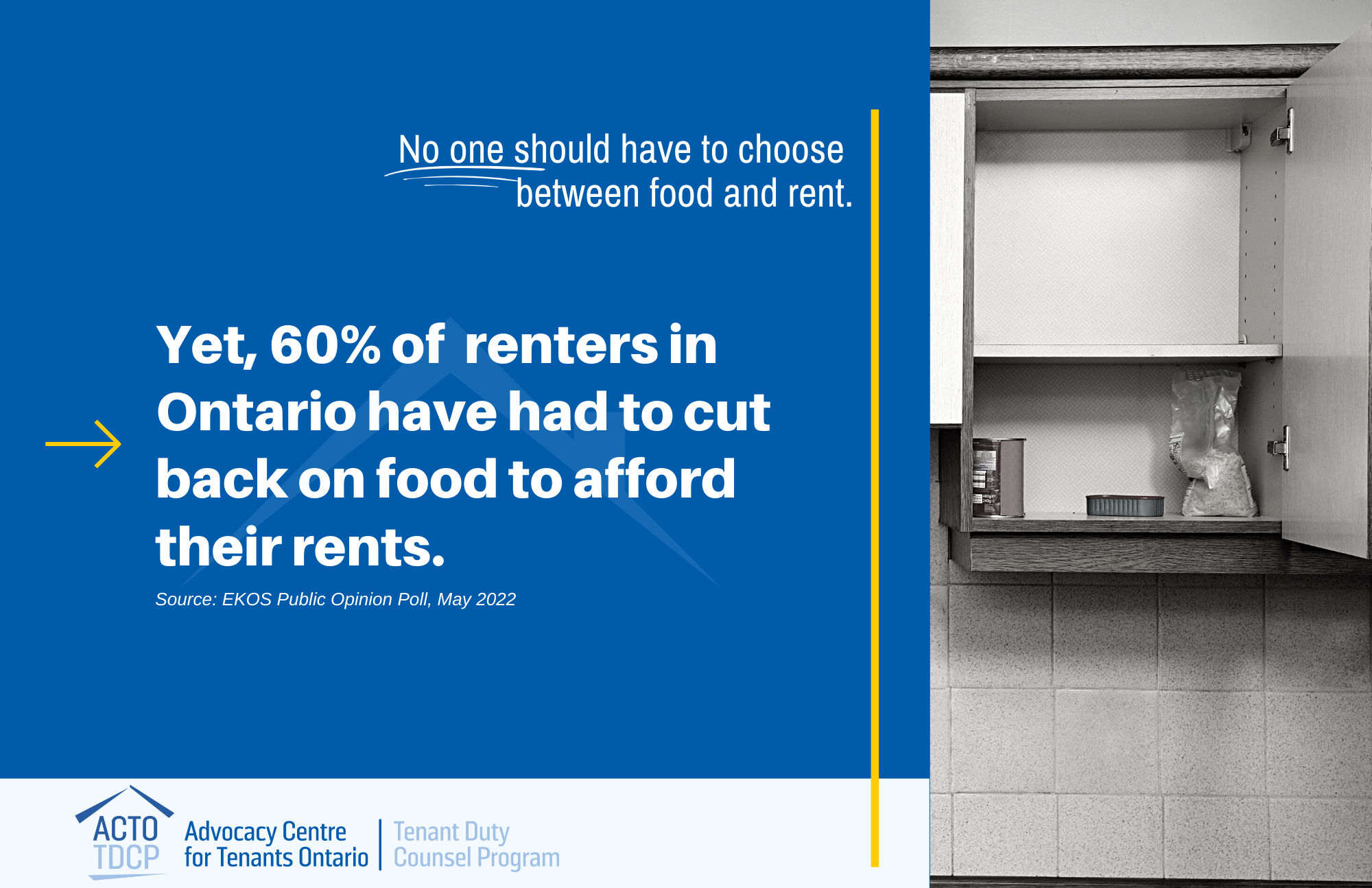
No one, anywhere, should have to choose between food and shelter. And yet in Ontario, that’s exactly what we’re seeing – 60% of renters said they have had to cut back on food to afford their rents. 74% had to cut back on their other spending to afford their rents.
PERFECT STORM:
FOOD AND HOUSING CRISIS, PLUS RISING INFLATION
These soaring rental rates are pushing more people with lower incomes into very precarious financial situations. 65% of low-income renters would not be able to pay their rent over the next 3 months without taking on debt, should they lose their income.
Understanding poverty is not just about measuring household income – it means we also have to look at how much people can save and how long they can cover their basic costs if they were to lose their incomes. Anyone who pays 50% or more of their income towards their shelter is at a very high risk of becoming homeless. Ontario renters are balancing on a knife’s edge to stay housed.
Affordable options for renters are dwindling
Renters are struggling to stay in their communities. 1 in 3 renters have recently considered moving to a different municipality due to an increase of rental costs. This means uprooting them, their families, possibly their jobs – every part of their life just to find a home they can afford. Even for people who are considering sacrificing so much are discovering that rents remain unaffordable almost everywhere, and competition for what’s available remains fierce. Their options for affordable, safe and secure housing dwindle day-by-day.
The solutions are multi-faceted, but one place to start is bringing back real rent control
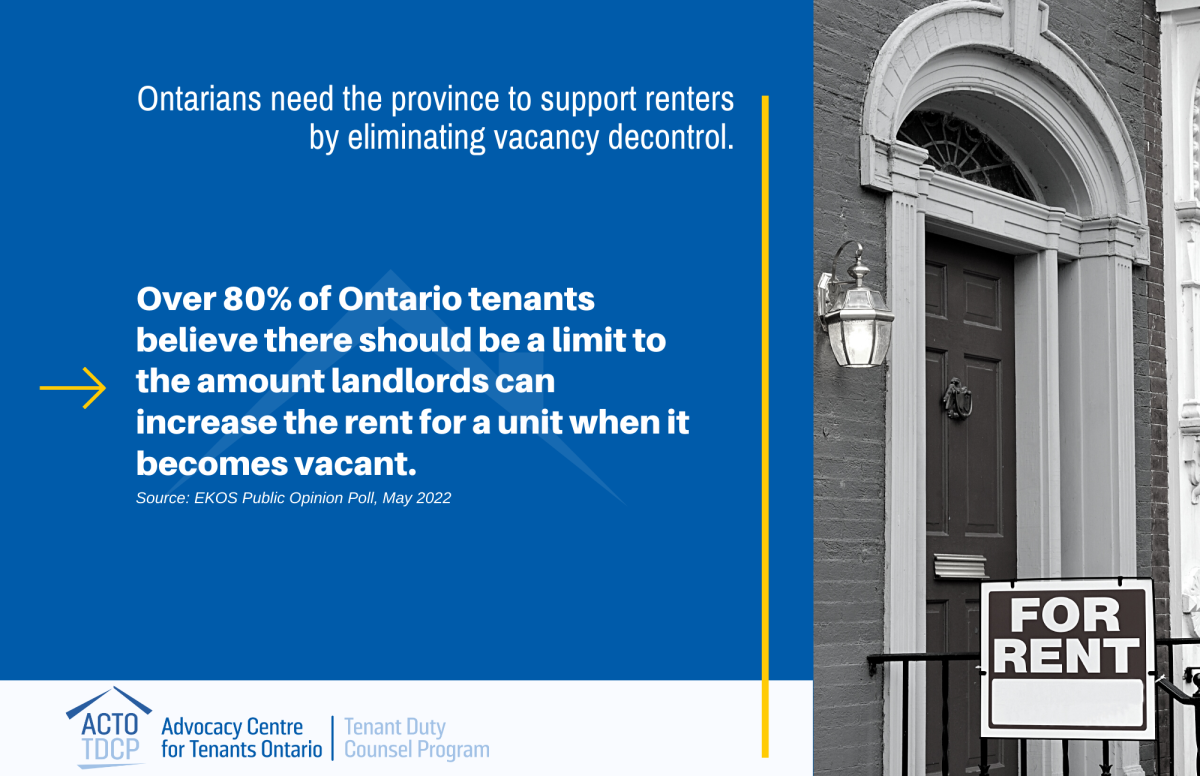
Eliminating vacancy decontrol is a popular idea among renters. Over 80% of Ontario tenants believe there should be a limit to the amount landlords can increase the rent for a unit when it becomes vacant. We agree.
We encourage all Ontarians to reflect on their housing priorities, and look closely at each provincial party to see what’s on the table in this election. The stakes for renters could not be higher.
Wind and solar generation for a category called “Wind, Solar, etc.” by the IEA. Amounts are for 2020 for Germany, the UK, Australia, Norway, the United States, and Japan. For other groups shown in this chart, the amounts are calculated using 2019 data.
The share of total energy provided by the Wind and Solar category is very low, only 2.2% for the world as a whole. Germany comes out highest of the groups analyzed, but even it is replacing only 6.0% of its total energy consumed. It is difficult to imagine how the land and water around Germany could tolerate wind turbines and solar panels being ramped up sufficiently to cover such a shortfall. Other parts of the world are even farther from replacing current energy supplies with wind and solar.
Clearly, we cannot expect wind and solar to ever be ramped up to meet our energy needs, even in combination with hydro.
HERE ARE EIGHT CRITICAL TAKE- AWAYS
[1] Batteries are suitable for fine-tuning the precise time during a 24-hour period solar electricity is used. They cannot be scaled up to store solar energy from summer to winter.
[2] Ramping up hydro is not a solution to our problem of inadequate energy for heat in winter.
[3] Wind energy is not greatly better than hydro and solar, in terms of variability and poor timing of supply.
[4] As more wind and solar are added to the grid, the challenges and costs become increasingly great.
CHINA'S GREEN ENERGY FAILS REVEALING DEEP CONCERNS
[5] The word “sustainable” has created unrealistic expectations with respect to intermittent wind and solar electricity.
[6] Energy modeling has led to unrealistic expectations for wind and solar.
[7] Competitive pricing plans that enable the growth of wind and solar electricity are part of what is pushing a number of areas in the world toward a “freezing-in-the-dark” problem.
[8] The world is a very long way from producing enough wind and solar to solve its energy problems, especially its need for heat in winter.
For the 44 million households who rent a home or apartment in the U.S., inflation keeps pushing costs higher and higher. Anger is rising too. It could be a breaking point.
Here’s a list of places you might imagine seeing an argument over housing policy. A city council meeting. A late-night zoning hearing. Maybe a ribbon-cutting to christen a new affordable housing complex.
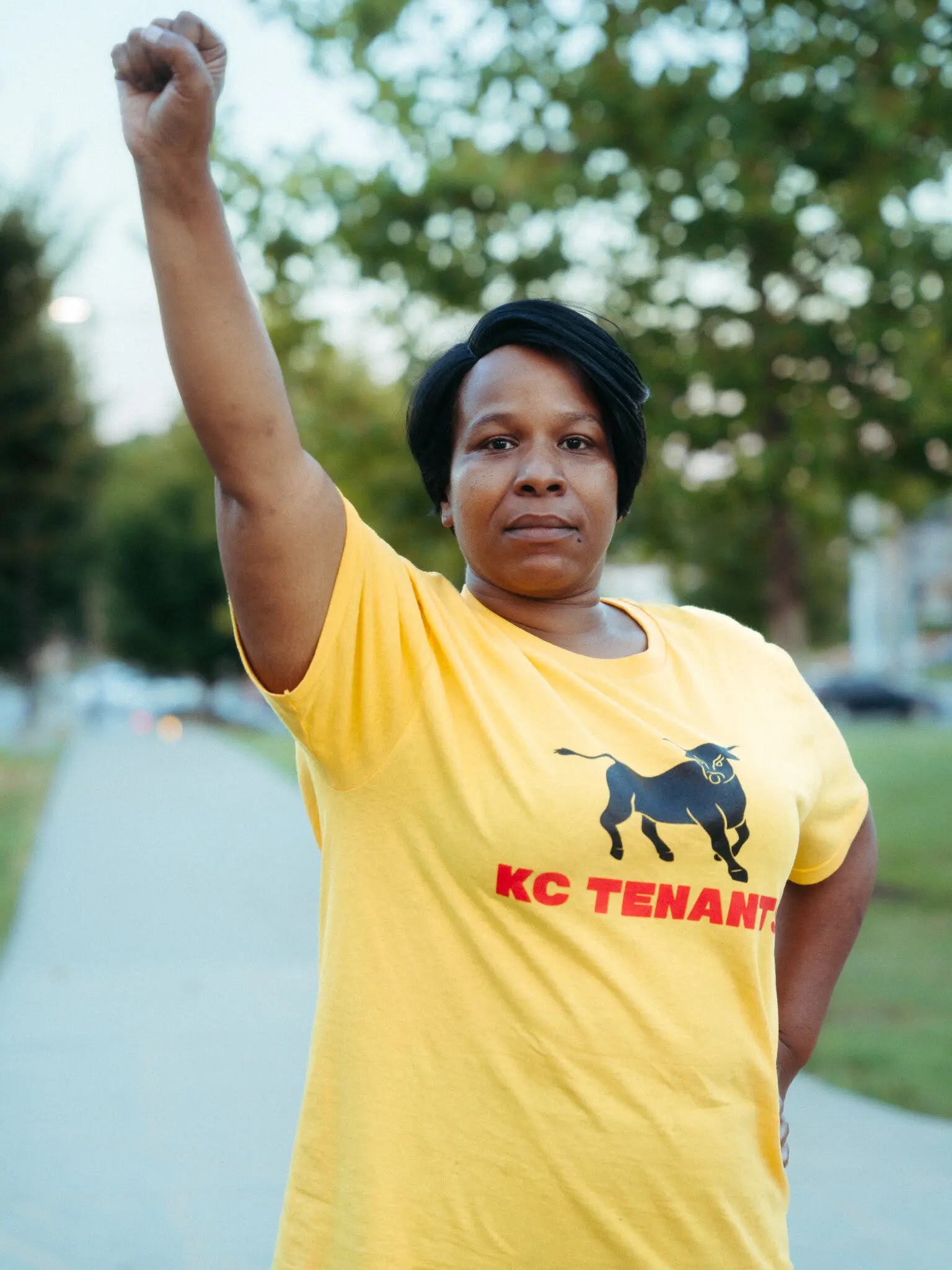
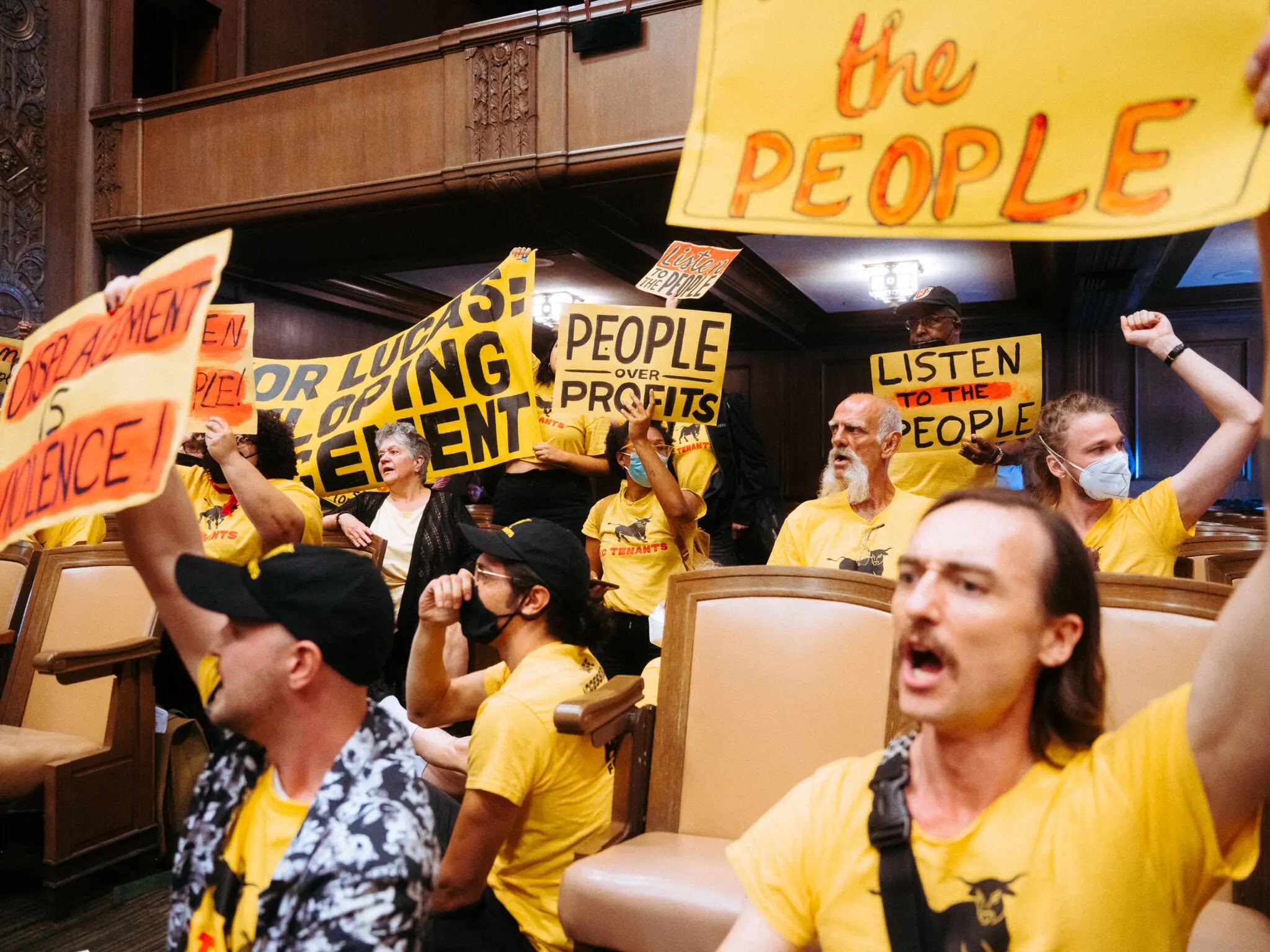
Instead, there was Quinton Lucas, the mayor of Kansas City, Mo., on a stage dressed as the pope with a half-dozen hecklers in yellow T-shirts berating his new housing plan from the audience in front of him. Mr. Lucas had arrived at the outdoor Starlight Theater on a warm August evening for a cameo appearance in a local production of “Sister Act.” Just before he walked onto the stage, the demonstrators, who belonged to a group called KC Tenants, unfurled a banner that read “Mayor Lucas: Developing Displacement.”
A pack of uniformed security guards promptly smothered the scene. During the slow procession to the exit gates that followed, members of KC Tenants chanted, “The rent is too damn high!” while the audience tried to focus on the mayor/pope and the dancing nuns.
Such is the state of housing in America, where rising costs are flaring into pockets of resistance and rage. Take two-plus years of pandemic-fueled eviction anxiety and spiking home prices, add a growing inflation problem that is being increasingly driven by rising rents, and throw in a long-run affordable housing shortage that cities seem powerless to solve. Add it up and the 44 million U.S. households who rent a home or apartment have many reasons to be unhappy.
REMEMBER IT CAN HAPPEN AGAIN
''HEY MOM - WHERE'S THE PITCHFORK?''
That unhappiness extends across the economic spectrum. At one end are renters who aspire to buy a home but have had their dreams dashed by high home prices and, now, rising mortgage rates. At the other are low-income tenants who make up the bulk of the 11 million households who spend more than half of their income on rent. In between is a hollowed-out middle class that is steadily losing ground, although not enough to qualify for much sympathy or help.
WE THE PEOPLE
The confluence of all these forces has fueled a swell of tenants’ rights activism that has brought organizing muscle and policies like rent control to cities far beyond the high-cost coasts. Kansas City, Mo., is a leading example. With a population of 500,000, where the avenues are lined with brick buildings and side streets have modest homes with raised porches, the city offers little to suggest a renters’ revolution. Zillow’s home value index puts the typical Kansas City home at $230,000, or more than $100,000 below the national level.
But with a steadily expanding economy driven by the logistics and medical industries, Kansas City has seen its rents increase 8.5 percent from a year ago, outpacing the rest of the nation, according to rental search site Apartment List. Over the past decade, Kansas City, like many places, has added a collection of high-end towers and apartments even as its stock of low-income housing has withered. The strain from rising rents, which landlords say they need to cover their costs, is creeping from people working in low-income service professions to middle-income teachers and city workers, part of a festering affordable housing crunch that spreads more widely across the nation each month.
KC Tenants is one result. Pairing aggressive protests with traditional lobbying, the group exploded onto the political scene during the pandemic and has since become instrumental in passing tenant-friendly laws like an ordinance that gives renters a lawyer during eviction proceedings. It has also left a trail of embittered opponents who find the group’s tactics, such as protesting outside judges’ homes, ill-suited to what many residents describe as a cordial Midwestern town.
“It’s a transition in politics for us,” said Mayor Lucas, a Democrat, who says he meets with the leaders of KC Tenants regularly, despite being a frequent subject of the group’s protests. “There is a new, almost tougher political edge, in the sense that there are people who are organizing and intrigued by politics and are very angry and are not coming out of the same institutions that built a lot of us.”
END OF AFFORDABLE HOUSING
America’s housing problem was simmering long before the pandemic, and tenant organizing is a well-established trade. What’s changed is the depth of the housing shortage and the suddenness with which Covid-19 and inflation have tipped smaller cities into an affordability crisis. This has opened the aperture for policies once deemed politically impossible, in a wider range of markets.
Unlike homeowners, whose budget problems are blunted by a litany of tax breaks and fixed-rate mortgages, renters are mostly unprotected from rapidly rising prices. Once cities around the country passed widespread eviction moratoriums and emergency rent caps that were followed by tens of billions of dollars in pandemic rental assistance, it was only natural for housing activists to push for some of those temporary policies to be made permanent.
Politically speaking, inflation has only helped. Nationally, rents are now 20 percent higher than they were in early 2020, creating an opportunity for renter-friendly laws to get baked into long-term policy.
INFLATION OUT OF CONTROL
“People take for granted that rent is always going to go up,” said Tara Raghuveer, a co-founder of KC Tenants. “There’s so little political imagination about what could be different, and now I think that’s changing.”
A hyper-focused worker who blends the rhetoric of a revolutionary with the efficiency of a chief executive, Ms. Raghuveer also directs the Homes Guarantee campaign, which works to create tenant unions around the country. She described KC Tenants as both a local movement and national experiment through which organizing ideas can be test-driven.
“I think every national organizer should be accountable to a local base,” she said.
During a three-day visit in which I hung around the office and shadowed meetings and protests, Ms. Raghuveer returned repeatedly to an idea that has become a refrain among tenant groups: the hope that growing resentment over housing costs is fostering a broad tenant identity that will inspire a wide range of renters to organize and vote with a shared interest. In the activist nomenclature, this is known as “tenants as a class.
”That’s an audacious goal in a country where homeownership is all but defined as success. An irony of the nation’s housing problem is that it’s become so pervasive that it has created as many opportunities for cleavage as it has for coalition. Need has grown faster than resources, making housing policy a prism through which a stealth conflict between the middle class and the truly poor is filtered.
Even so, what’s clear is that in Kansas City and elsewhere tenants are becoming a real constituency. That’s not something you could say as recently as a few years ago. But a few years ago the rent wasn’t quite so high.
Getting the Data
Tara Raghuveer, KC Tenants’ founding director, working outside the East Patrol Division Station where the group camped out waiting for Board President Tiana Caldwell to be released on bond.Credit...Barrett Emke for The New York Times